Protostoise - putting the puzzle pieces together

As far as these early test prints go, Blastoise is the only card name known to exist like this.

It’s likely the only one, because we’ve seen the uncut sheets, which don’t contain any different Pokemon cards.

If there’s anything made between these and the Demo Boosters, it would probably look more like a normal card.

I think it would be awesome to see a Charizard like this, but don’t hold your breath. :slightly_smiling_face:

Awesome! I suspect the German, Italian, and French in particular may have been exclusively made for the press kits. I came across a booster box of Portuguese but have only seen an handful of the packs ever go up for sale in the last 5 years. They are basically as rare as Korean Unlimited.

Here is an example of an art set, the far right is what 99.999% of the packs look like. They were typically all made in Belgium with long crimps. It’s a mystery I can’t solve.

3 Likes

One more important thing to say about the Blastoise Test Prints before I move on to some of the other topics.

Counterfeits do exist, so be very careful with raw single examples.
The real cards are extremely rare, so you’re more likely to encounter a fake than a real one.
They can be identified with high resolution images of the card face.
Feel free to send me a message before buying if you’re uncertain, and include good pictures. Facebook is the best place to find me, but I’m around other places also.

CGC is also capable of identifying the counterfeit Blastoise cards.
You could request that the seller have their card graded at CGC before you buy it.
The seller will probably be aware (or at least suspicious) that their card is fake, and they might decline to have it graded, but at least you won’t get scammed.

These have a higher level of craftsmanship than most counterfeits.
The counterfeiter acquired a real modern sheet of foil Magic cards, used solvent to remove the ink from the card faces, and printed the fake Blastoise image with an offset printing press. These fakes were not cheap to make.
They ended up being sold from a website and on eBay for 3 digits each, a price that’s too good to be true if the card were real.

The counterfeit Blastoise cards showed up around April 2022.
Arjun Dhillon sent me images of two cards, to see if I’d be able to spot them as fakes.
I did spot them.

He also told me that he was fond of AGS grading company, and had submitted over a hundred first edition base set cards to them.
A month later, it was a big scandal that AGS had been grading real shadowless cards with fake 1st Edition stamps.
AGS Grading Fake 1st Ed Base Cards

Rattle made a playlist about some of the scams this person has attempted.
YouTube Playlist

The counterfeit Blastoise cards ended up being sold for 3 digits each on a website and on eBay.
Buyers should have been suspicious about the price.

One of the fakes was submitted to CGC in December 2023.
They wrote an article about it, which includes info that can help you spot the fakes.
CGC Article on Counterfeit Blastoise

Someone who had purchased on eBay, tried to sell one of these fakes to a friend of mine in June 2024.
Again I was able to spot that it’s not an authentic card.

It’s not something that I see often, but they’re out there, and people need to know to be careful.

.

If anyone is planning to grade a Blastoise Test Print, I highly recommend using CGC.
CGC has graded all the other Blastoise Test Prints, so they’re the grading company with the most experience for these cards, and they didn’t get fooled by the fake ones.
I don’t have much confidence in the ability of other grading companies to authenticate one of these cards, if they’ve never seen a real one before. It’s just a matter of having the experience to get the job done.

5 Likes

I DO think the Pokemon FOR POSITION ONLY cards are test prints, for a variety of reasons, but not because they say FOR POSITION ONLY.
FOR POSITION ONLY doesn’t mean that something is a test print.
Most FOR POSITION ONLY cards are Filler Cards.
A Filler Card is what occupies the unused spaces of a sheet, and is intended to be thrown away at the print facility. Occasionally they don’t get thrown away, and accidentally slip into sealed product, so they’re pretty rare to find outside the print facility, and people do collect them.

More about FPO
What we’re talking about here, is digitally creating the sheet layout inside WotC headquarters, way before anything gets printed.

Going way back to the early 1990’s, the sheet layout software had a grid on the monitor, with a space for each position on the sheet.
If you wanted a sheet position to contain a card, you needed to do two things.

  1. drag the .tiff image file with the combined art and card frame into that position
  2. drag the .eps text file with all the words and symbols into that position

When the sheet position was occupied, it would have an X on the monitor.
You couldn’t see what was in that sheet position, you could only see the X to tell you that something was there. It was almost like working blind.
So you really had to focus, to make sure that each position contained the correct card image, and ALSO that you’d assigned the correct text to each image.
On top of that, the file you were dragging didn’t always snap into position correctly on the grid. It might be about a quarter inch off center, and you wouldn’t know because it would still show the X.
So proofreading was really important. They’d do a black and white print out on thin paper for proofreading in the office. In the really early days it was regular sized paper, but they soon got a larger format printer that could do quadrant sized paper (still thin paper, not cardstock).
Occasionally they’d still miss something, either because they didn’t catch it during proofreading, they missed it in the long list of stuff they were supposed to fix, or they messed it up accidentally while trying to fix something else.
Because each sheet position was filled independently by layering two files, you could get situations where two identical cards on the sheet actually had different text alignment, or in some cases one copy might have entirely the wrong text that had been meant for a different card. Oops!
Having the card image and card text as separate files was handy for creating sheets in multiple languages. You could retain all the images and sheet layout while deleting the text. Then you’d have to assign the correct translated text to each sheet position.
The early sheets were all 121 cards, 11 x 11.

By the time Pokemon came around, the sheet layout software was much improved.
First you’d select the sheet size, by populating each position with the same digital file, so it was a whole sheet of the same “card”.
At first, that “card” was just plain black with no design at all.
Then for each sheet position, they’d link that position to the digital file for the card that’s supposed to be there. They could see the card on the screen, which was neat.
The black positions weren’t done yet, and the other positions contained a card image.
Because each position linked to a digital file, you could link multiple sheet positions to the same digital file, and those sheet positions would have identical cards, which greatly reduced mistakes.

Solid Black was used for Magic, because Magic has black borders. This way an off center cut in the print facility would be less noticeable, because there’s not a gap between cards on the sheet.
Magic was doing this in 1997.
When Pokemon came along in 1998, it had yellow borders, so solid yellow was used to populate the sheet layout.

Cards are printed on sheets, but sometimes you don’t need all the sheet positions.
For example, if sheets are 11 cards x 11 cards = 121 cards, then you can put two 60 card Theme Decks on a sheet, and you’ll have one sheet position leftover.
That leftover sheet position remained solid black (or yellow for Pokemon), and isn’t assigned another card image.
Then WotC tells the print facility to throw away all the solid color cards, they don’t go into the sealed product.
These physical cards that are supposed to be destroyed, are called Filler Cards, because they fill the unused spaces of the sheet.
However, the earlier digital version of these same Filler Cards are called FOR POSITION ONLY cards, because they’re only used temporarily to help the typesetter see the sheet positions on the computer screen.
Because they’re digital, they’re not physical cards at all, they’re just a digital design that fills the card space.

The problem with having a solid color design being used FOR POSITION ONLY, is that when you start and the whole sheet is the same color, it’s really difficult to find a specific sheet position where you’re supposed to put a specific card.
You can’t count X spaces over and Y spaces down, because solid color means you can’t tell where the edge of each sheet position is.
So the typesetters have used a variety of FOR POSITION ONLY card designs over the years, to make their job easier or more enjoyable. It’s something the public is never supposed to see.
They might use blank white with a colored border, a big X, the brand logo, the word DISCARD, or whatever they want.
You can look at filler cards to get an idea what the various FPO designs have been.

Kat was the typesetter for Expedition, and it looks like she was using the bold white lettering FOR POSITION ONLY while creating the sheet layout.
It looks like she had it as a text layer over all the sheet positions.
Maybe she’d remember something about these cards.

White ink is used on foil cards to mask the areas that aren’t supposed to be foil.
They call this White Underprinting, or WUP for short.
But that’s a special thing for foil cards, and most cards don’t use white ink.
White is typically the abscence of ink, which reveals the white cardstock underneath.
So white in a digital card design, typically generates as a knockout during color separation for printing.
Knockout means that all digital layers beneath the white are deleted, so the blank cardstock is exposed.
That’s what happened with these Pokemon FOR POSITION ONLY cards. They were sent to color separation without toggling off the FPO text.
This could happen by accident, and would be a HUGE expensive mistake on a regular print run, but I don’t think that’s what’s going on here.
These cards have enough differences from normal cards, that I believe the FPO text was intentionally left on the card.

I do think these are Test Prints, but I can only speculate on what was being tested, perhaps it was multiple things.
Test Prints are usually done for a new process or material, and they probably would have needed to make sure the E reader codes worked, so a test for the E reader codes makes sense.
But Test Prints aren’t normally inside booster packs. That’s an unnecessary step before sending Test Prints to WotC for review.
Based on what I’ve seen with WotC Magic test prints, these Pokemon FPO cards could be a quality test for a new print facility. Before commiting to an expensive full print run, WotC wants to know if the facility is qualified to do the job. Can they match the quality of existing print facilities, or is it just going to be a bunch of marked cards? Do the E reader codes work, and also the quality of the packaging.
I recommend taking a closer look at the booster packs themselves, vs a normal booster pack.
It would be nice to know which print facility these came from.

WotC doesn’t send regular production print files to a new facility that’s not under contract.
This is to ensure that the new facility isn’t able to create unauthorized cards.
Magic has Test Prints from late 1994 and through 1995, where WotC was looking for a new print facility. These cards are all intentionally different from regular cards. One series has intentionally mismatched art and text files.

From 1996, Magic has a new facility test that is Test Print Netrunner cards (different card game) inside Chinese Magic 4th Edition booster packs that are different from normal production packs.
The limited card selection and the way the cards repeat inside the pack, reminds me of your Pokemon FPO Expedition cards inside Legendary packs.

These may have been created while Expedition was still in the process of being typeset.
The missing HP on Charizard is very likely a mistake, but the rest seems intentional.

3 Likes

The Matchprint cards are really cool, but I don’t consider them to be Test Prints.

Test Prints are created by WotC to test a new process, material, or facility.
They’re printed at the print facility, with attention to quality because they get returned to WotC for review.
To save time and money, there’s often several variations on a theme, so that WotC can select the version they like best to move forward with.
Test Prints are rare and don’t happen very often because print runs are expensive (setup cost). Test Prints are very small print runs, so they never reach economy of scale compared to the setup cost, and WotC doesn’t make any money from them because they’re not intended for sale to the public.
Test Prints only happen when the only way to answer an important question, is to send it to the print facility and see how it comes out.

The Matchprint cards belong to a category called Color Proofs.
Color Proofs are a normal part of preproduction, they happen all the time, and they’re not made at the print facility with an offset printing press.
WotC has the Color Proofs made locally in Seattle (still not on a printing press).
You may have seen Rainier Color listed as a place WotC has stuff printed, but it’s not an industrial print facility, it’s a local service Bureau. They do preproduction stuff like Color Proofs and making the Color Separations which get sent to the print facility to make the printing plates. Mount Rainier is near Seattle.

The constant tone digital image on the WotC computer monitor is created with Red, Green, & Blue pixels (the same as basically any computer or Television), and doesn’t have color that’s identical to the finished product.
The physical cards are printed in half tone with Cyan, Magenta, Yellow, & Black ink dots (not pixels).
Physical printed cards will always look different from the original computer image, due to the shade of inks used, opacity of the ink, the color of the substrate being printed on (cardstock or maybe foil), and the amount of dot gain (which is sort of like ink bleed). Dot gain is affected by temperature, humidity, surface porosity, and the speed of the printing press.
But it’s cost prohibitive to do Test Prints at the big print facility just to dial in the color, so instead they make Color Proofs locally.

A Color Proof, is a simulation of what the finished product should look like, based on the color separations.
It’s like a quality check for the color separations, before sending them to the print facility.
It’s not exactly what the finished product will look like, but it’s close enough that WotC can decide whether they need to fix anything, or if it’s OK to send these color separations to the print facility for a large expensive print run.

There’s a few different technologies that are used for making Color Proofs, as I mentioned it’s not the same as printing regular cards.
Imation Matchprint, FujiProof, & Techtronix Dye Sublimation were the ones WotC has used over the years.
“Matchprint” & “FujiProof” were often casually used as slang terms for other types of Color Proofing, sort of like how people say Kleenex instead of facial tissue.
The Pokemon Matchprint cards we’re talking about here are obviously Imation Matchprint, and not one of the other technologies.

Imation is the company name, and Matchprint is their product name.
Commercial Base is the type of paper it’s applied to. You’ll notice that it’s not typical Pokemon cardstock like the print facility would use.
Digital Halftone basically just means simulation of halftone offset press printing, and that’s what a Color Proof is.
You’ll also notice they have a more glossy surface on the front, and don’t have a normal card back.

Color Proofs are always quadrant sized from what I’ve seen, so it’s not going to be all the cards in the set. That’s why some cards are missing.
Color Proofs are practically never cut into individual cards.
WotC can see the colors just fine without cutting it, so there’s no reason to cut them.
Whoever saved them, must have really wanted to store them in a binder, so that’s why they were cut.

Collectors have seen the Rainier Color name on a label from the back side of Color Proofs. Since they don’t realize from a photo that it’s not a normal sheet, they’ve mistaken Rainier Color as a print facility, but it’s not one.

Unrelated, but I’ve also seen United States Playing Card Company listed as a Pokemon Print facility, and I suspect that’s incorrect.
WotC did use United States Playing Card Company as their first USA print facility from October 1995 to sometime in 1996 for a product called Alternate 4th Edition.
The relationship ended with a lawsuit, and they didn’t work together again.
Since this was entirely before WotC had Pokemon, it’s really unlikely that any WotC Pokemon cards were printed at USPCC.
In 2019, Carta Mundi bought USPCC, so perhaps modern Pokemon could be printed there.
USPCC typically prints Bicycle playing cards.

(perhaps someone needs to make a complete guide for these Matchprint cards?)

6 Likes

I hope my research makes some actual impact like this

3 Likes

We need to have a conversation about this sometime as well👍

2 Likes

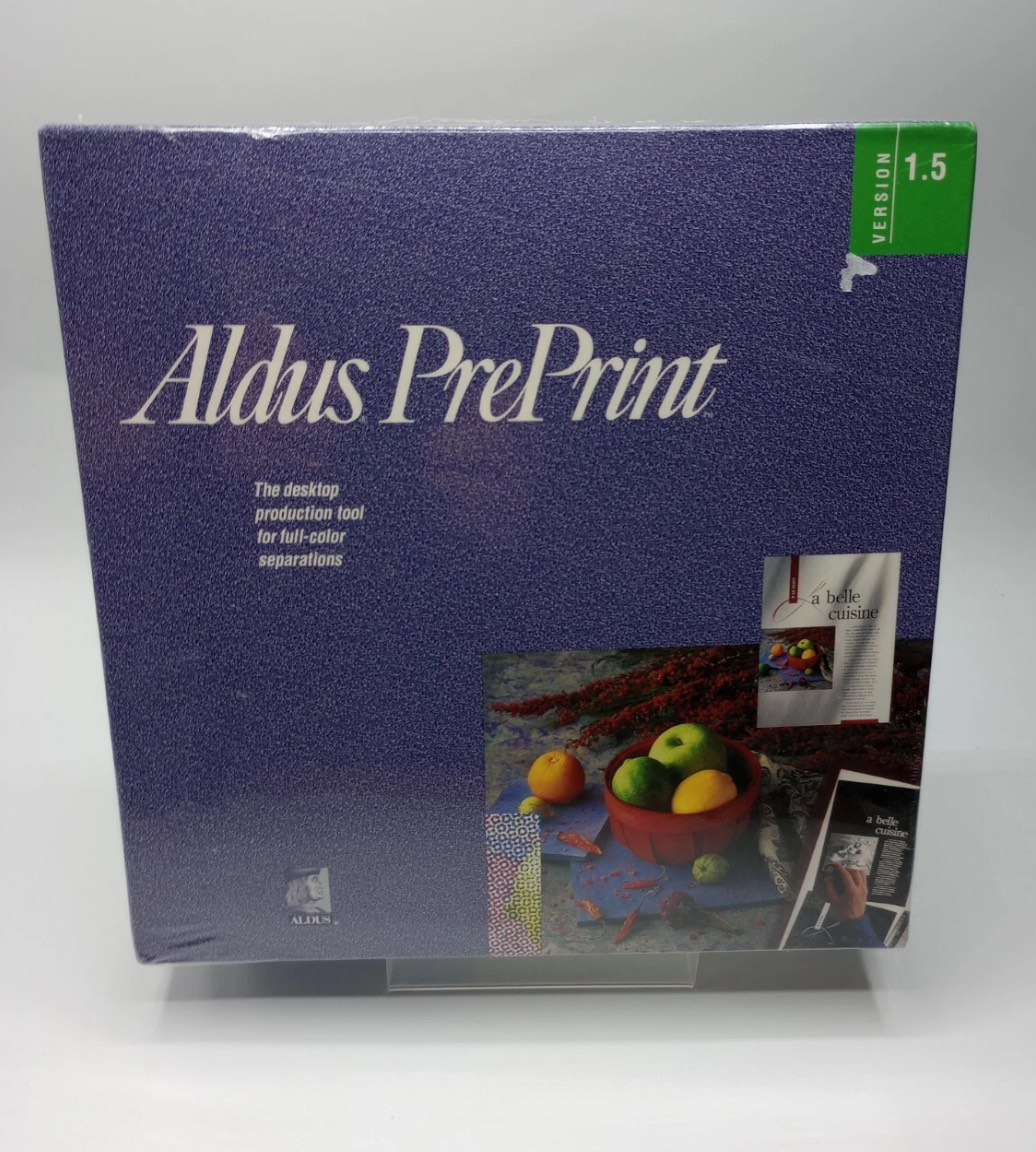
I am curious if it is accurate that prints were made using this software? I came across it on a page discussing WOTC prints. You can even see the same rosettes on the cover so it seems probable.

1 Like

@cataclysm80 I just want to say I’ve been loving your comments here, I’m learning so much about WoTC history. It’s really fascinating stuff! The funniest part to me is that the artist found those holofoil sheets just by dumpster diving, and used the sheet to create their own artwork. So many fun details to all of these stories :slight_smile:

8 Likes

Sure :slightly_smiling_face:

It looks like the print facility conversation has already started on THIS OTHER POST.

…OR if you’d like to see a different Pokemon Matchprint that hadn’t been shown to the public, I recently posted one OVER HERE.


Thoughts on what’s going on here? Cosmos, holo shift, blank back…

2 Likes

All I know is your pfp is legit!

2 Likes

I’m pretty sure that the Cosmos holo Fossil Test Prints that I saw, had regular Pokemon backs and regular round corners.
More info on those at this link.
English Fossil Cosmos Test Prints

I don’t have any inside knowledge on that specific white back square corner card that you posted, so what follows is an educated guess.
Since CGC graded it, I’m pretty sure that the card is authentic, and the ink dots will match a normal Fossil Ditto card, because they’d use the existing Fossil printing plates for this kind of a Test Print.
Because of the white back, I expect this is not typical Pokemon cardstock. This would be whatever kind of cardstock this sample Cosmos holofoil was already attached to when the unprinted sample sheet arrived at the print facility. For the same reason, I suspect this is older than Cosmos holofoil Test Prints done with Pokemon card backs.
There are factory cut square corner cards, but I suspect the card you posted is NFC (Not Factory Cut).
If I’m reading this population report correctly, it looks like CGC has graded 107 cards from this sheet.
It was probably cut in Texas, and I’ve got a pretty good idea who would have cut it.

3 Likes

Thanks for theorizing! Best I can tell, your assumptions are correct. This does not appear to be traditional card stock. When inspecting the side, it does not look to have a core layer. There was reportedly one sheet that was found, containing all fossil holos, and was not factory cut until more recently. Supposedly it was acquired from an unnamed ex employee from Japan. It was apparently rolled and required a great deal of effort to flatten.

I appreciate your perspective!

1 Like

That originated via way of D. Persins didn’t it? Don’t even get me started on my interaction when inquiring about obtaining of a couple higher graded copies from him…

Yes, you are correct. And yes, it did. I didn’t care so much about the grade… I passed on some of the higher ones, but thought these were pretty intriguing.

1 Like

As soon as I asked if SB was involved in this sheet at all, instant hostility and change in tone with a full block about 30 seconds later.

3 Likes

Interesting… who is SB?

SB is who I suspect cut the sheet in Texas.
He likes to leave the corners square as an indicator that it’s not factory cut.

He does go to Japan to find things, so if you think the sheet came from Japan, he could be who brought it to the USA.
I’m not sure how many things WotC sent to Japan for approval before proceeding, but WotC did have to get approval.

1st Edition English Fossil was October 10th 1999.
Base Set Cosmos Test Prints happened November 18th, so I’d put the white back sheet somewhere between those two dates.
Unlimited English Fossil was already on its 4th print run by November 1st 1999.

Sheets are often stored rolled.
Over time, humidity cycles repeatedly soften and harden the cardstock, so it will retain the shape it’s been stored in.
Ideally, sheets should be stored flat.
Returning a curled sheet to flat can be done through careful application of humidity, but it’s not easy, and better if you don’t have to.

3 Likes

Any idea why said individual is always involved in NFC prototype sheets and their distribution? Feel free to PM me if you want.