CGC to PSA Cross Grading Experiences?

Has anyone done any cross grading from CGC to PSA or vice versa as of recently with results to share?

I know there had been quite a few cross grades from CGC to PSA before CGC had changed their grading scale, but don’t see them anymore. And I also never seen anyone tried to cross grade from PSA to CGC.

I know many people will have different opinions on this, but for me a PSA 10 is equivalent to a CGC 10 in terms of difficulty. And I also get the sense there is a inherent bias for many that believe PSA grades more harshly simply because it’s the standard and trades at a higher price.

4 Likes

You won’t find too many PSA to cgc crosses for this reason. Even if it’s just as hard to get a 10 with cgc (which I agree), the market values PSA higher regardless so you won’t find too many people willing to guarantee a monetary loss for the same grade.

4 Likes

I constantly look at CGC 10 Slabs to see if the card looks PSA 10 quality. Most of the time I just pass because I don’t think it would 10.

5 Likes

Imo

PSA 9 ~= CGC 9.5 < CGC 10 < PSA 10 < CGC Pristine

not always true, also both companies will weigh different kinds of damage differently. And there is inherent variability within each company. But if I was forced to make a general ranking, this is how I would do it.

11 Likes

@pfm I feel like that’s in line with how the market is pricing it.

Would you say your opinion is based on generalized feel from market pricing or personal observation of your own card.

1 Like

Yeah

3 Likes

Yes, I did an extensive experiment:

2 Likes

Don’t have access to the doc

Sorry. I believe I fixed it.

Yup that worked! Very cool data

If you cross blue label CGC, likely better grade.
If you cross black label CGC, likely lower grade.

5 Likes

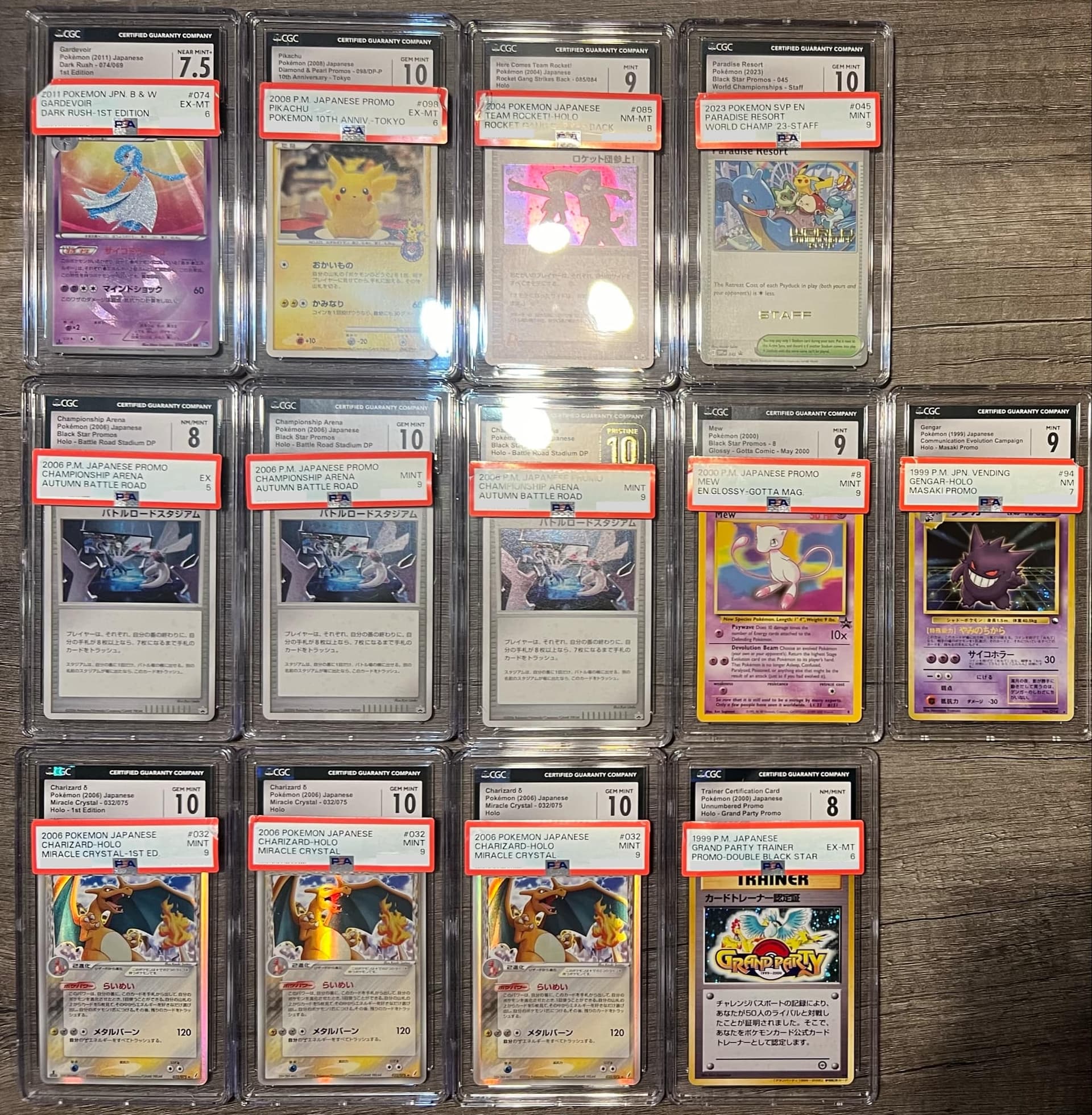
Bad photograph, and the inverse of the topic, but this falls in line with what @pfm said about the variability of each grading company.

15 Likes

Crossing a pristine championship arena is wild

1 Like

Thank you for sharing and your results are super interesting! If you are able, would you mind sharing close up front and back photos on some? Very curious about your championship arenas, paradise resort staff, masaki gengar, and grand party. I am guessing grand party was a PSA 6 for indent originally? Thank you so much

dang nice one lol

1 Like

Wanted to revive this topic now that some more time has passed.

Has anyone seen any newer evidence comparing black-label CGC 9s to PSA 9s, especially for vintage?

One of the better older comparisons I found was this CGC → PSA experiment:

The author (@jeverstones) did it because even a few years back with blue labels people claimed CGC was looser than PSA (CGC 10 ≈ PSA 9). He cracked 80 vintage non-holo blue-label CGC cards from one June 2023 submission; PSA graded them +0.93 higher on average, with sequential, non-cherry-picked results.

What I’m struggling to find is a similar larger comparison for newer black-label CGC 9s, especially using cards not specifically selected for upgrade potential. Since the same “CGC is looser” claim now seems to exist again for black labels, I’d be very interested in comparable data for the current grading era.

I did come across this YouTube experiment:

He cracked/submitted 265 PSA 9s to CGC, and says in the video:

“I personally did not check any of these cards. I just grabbed any random PSA 9. So, this is just completely random stuff.”

The CGC results were:

So 146/265 ended up as some form of CGC 10, which looks very different from the older blue-label CGC → PSA experiment, suggesting PSA being more strict than CGC black label.

Of course, this is the reverse direction, and I’m not sure how directly comparable it is to the experiment from @jeverstones for a few reasons:

  • Japanese cards rather than English
  • mix of vintage and modern rather than vintage only
  • unclear how representative the “random” PSA 9 pool actually was

Has anyone seen a good black-label CGC → PSA comparison with a reasonably large and unselected sample?

For those with substantial experience with PSA and both CGC label eras, how would you compare their grading standards?

In terms of card condition, not market value, would you say:

PSA 9 ≈ blue-label CGC 9 ≈ black-label CGC 9?

If not, is a black-label CGC 9.5 the closer equivalent to a PSA 9, or would you go as high as a Gem Mint 10?

And does that comparison change between holos and non-holos?
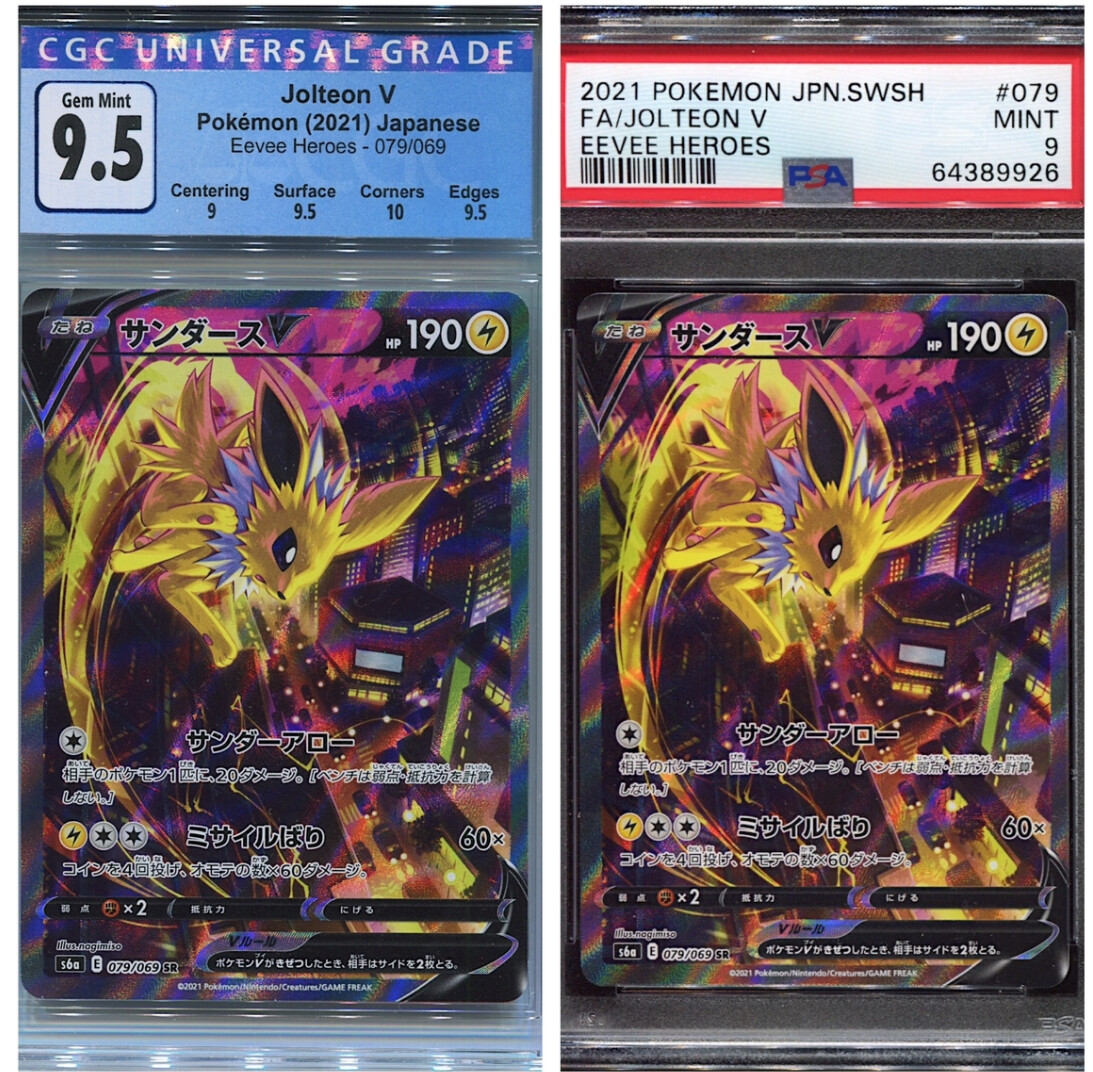
i crossed 2 cgc 9.5 (blue label) vintage english holos to psa 10 yearrrs ago… then i gave up coz i thought i would never bea able to beat that :rofl:

1 Like

Idk if people already said this before, but having sequential certs means they were likely all graded by the same grader, a single human is used as a stand-in for PSA as a whole, if he used only cards from a single CGC submission, that also means it was handled by a single grader (i.e. what are we even comparing here, a single grader from CGC to a single grader from PSA?). To me, that basically means the results are not reliable.

A single person submitting cards could likely never get a scientifically ‘true’ scope of grading standards across companies. Companies’ grading standards also drift over time and are readjusted as deemed necessary. The best you can do imo is look at overall grade-rates like done in this video:

(This person also cross-grades PSA to CGC, but those are cherry picked ofcourse)

Even this doesn’t account for specific choices people make with submitting cards to either company. Moreover, comparing a company to itself in different time frames can provide vastly different results, as internal decisions regarding grading standards are made (do you grade a card against its population, or against a theoretical pristine card, CGC’s update in grading standards etc).

You’re basically left with so many (scientific) uncertainties that I think it’s nigh impossible to make resounding conclusions, and it’s best to just trust your gut (human subconscious pattern recognition is insane, trust it).

2 Likes

This is great work. I was not expecting CGC slabs to actually cross to higher grades with PSA but in your data they obviously did incredibly consistently. Obviously all of them are old certs/ blue labels, which had harsher standards.

The missing context for me here is, how did you select the CGC slabs to try to cross? Were they selected completely randomly, or did you select slabs specifically because they had a good chance of crossing to an equal or greater grade with PSA?

Almost all newer certs CGC are harshly graded.

Especially vintage

3 cert (blue labels) - strong cards

4 certs (blue labels) - weaker as they did a grading scale change

Early black/white labels - weaker (check card scans)

Current black/white labels - very strong cards on average, especially vintage

3 Likes