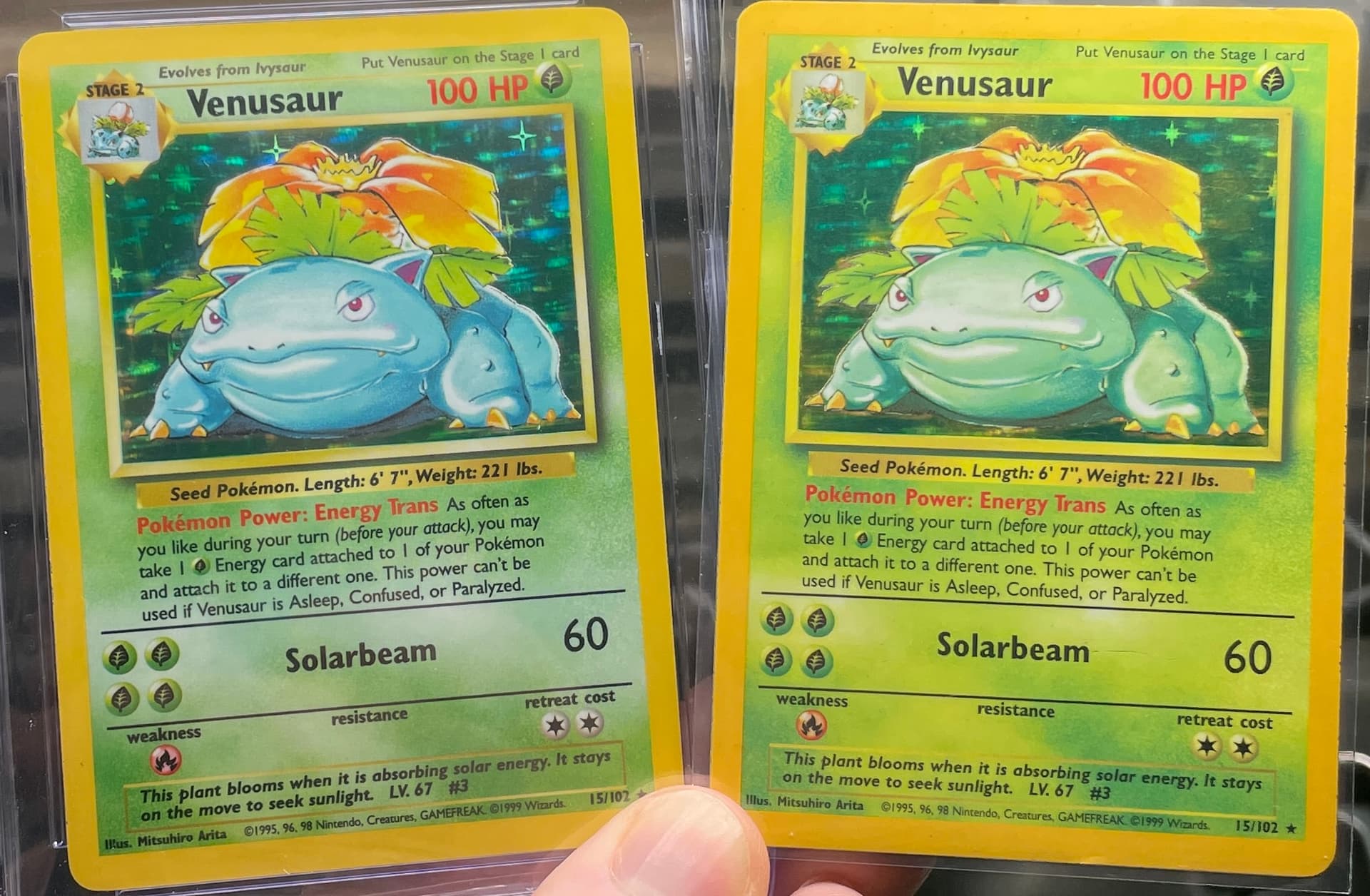
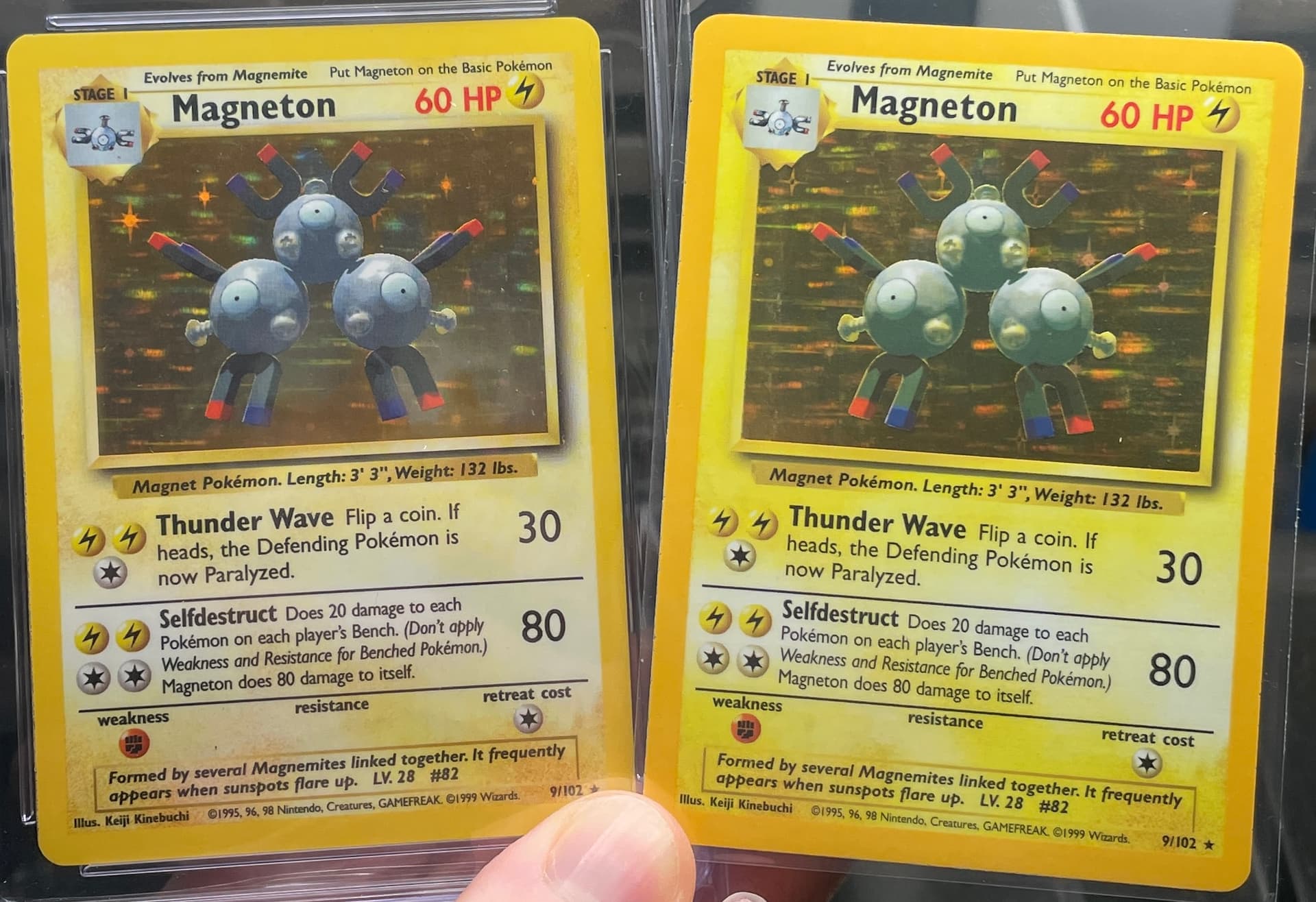
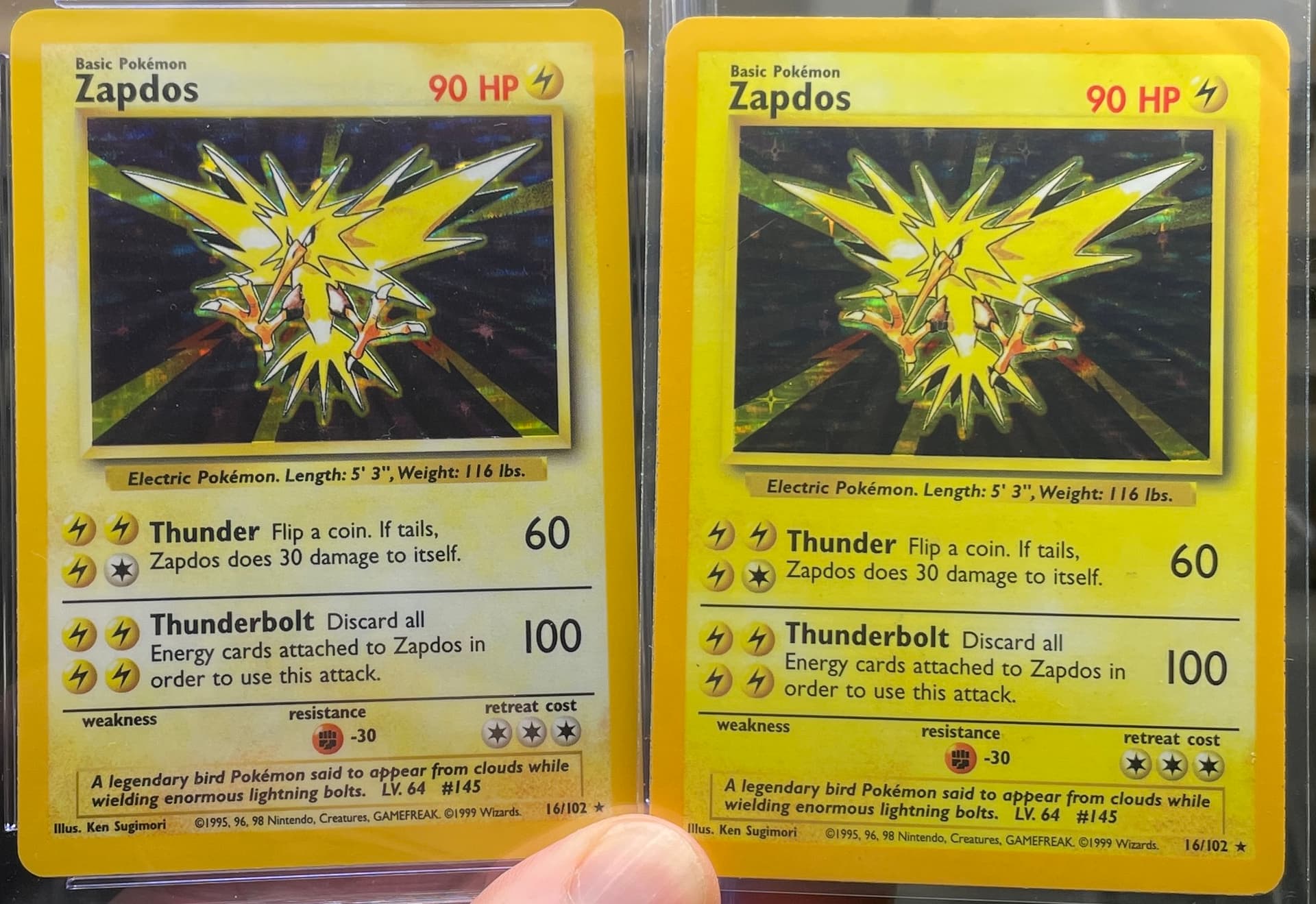
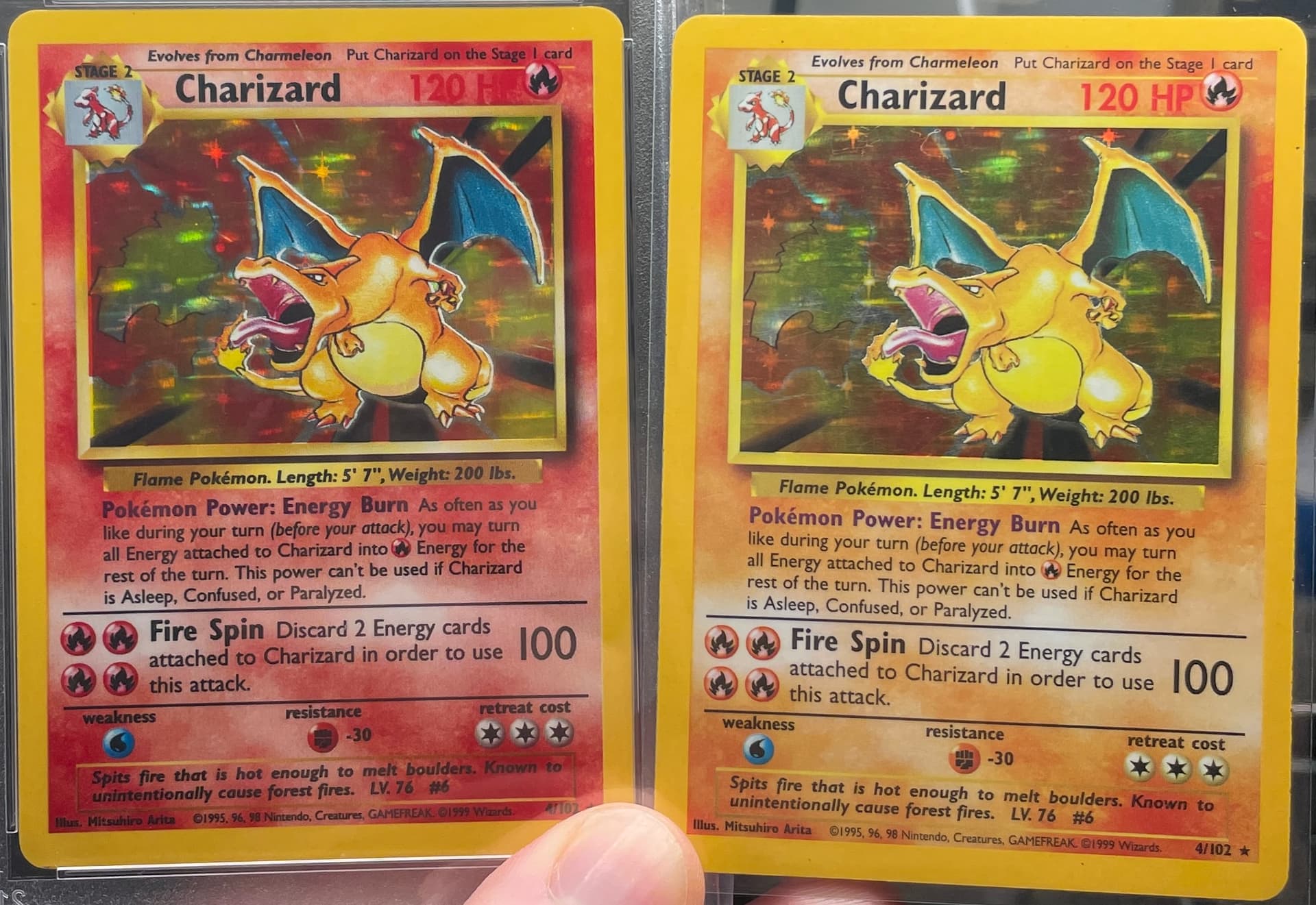
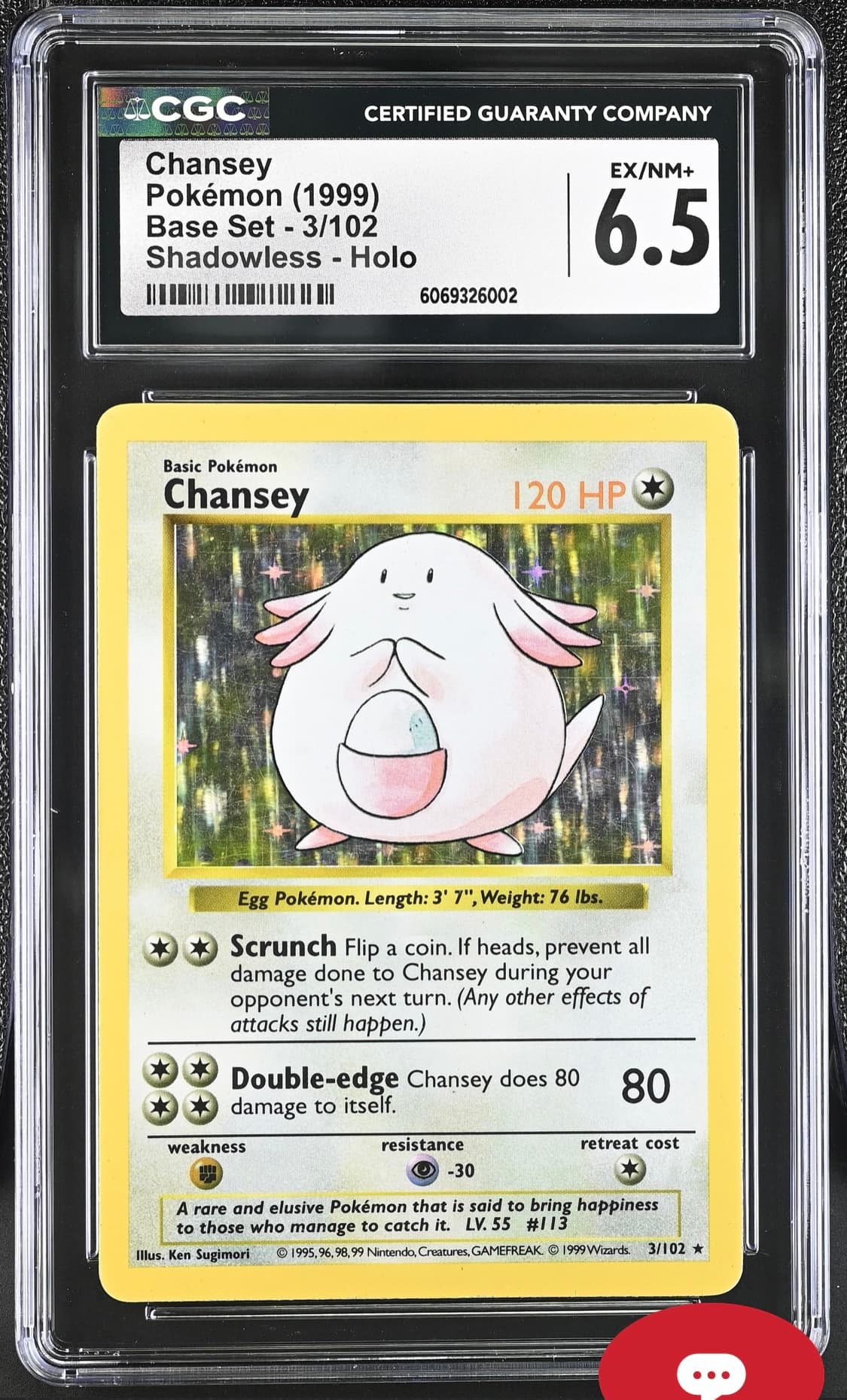
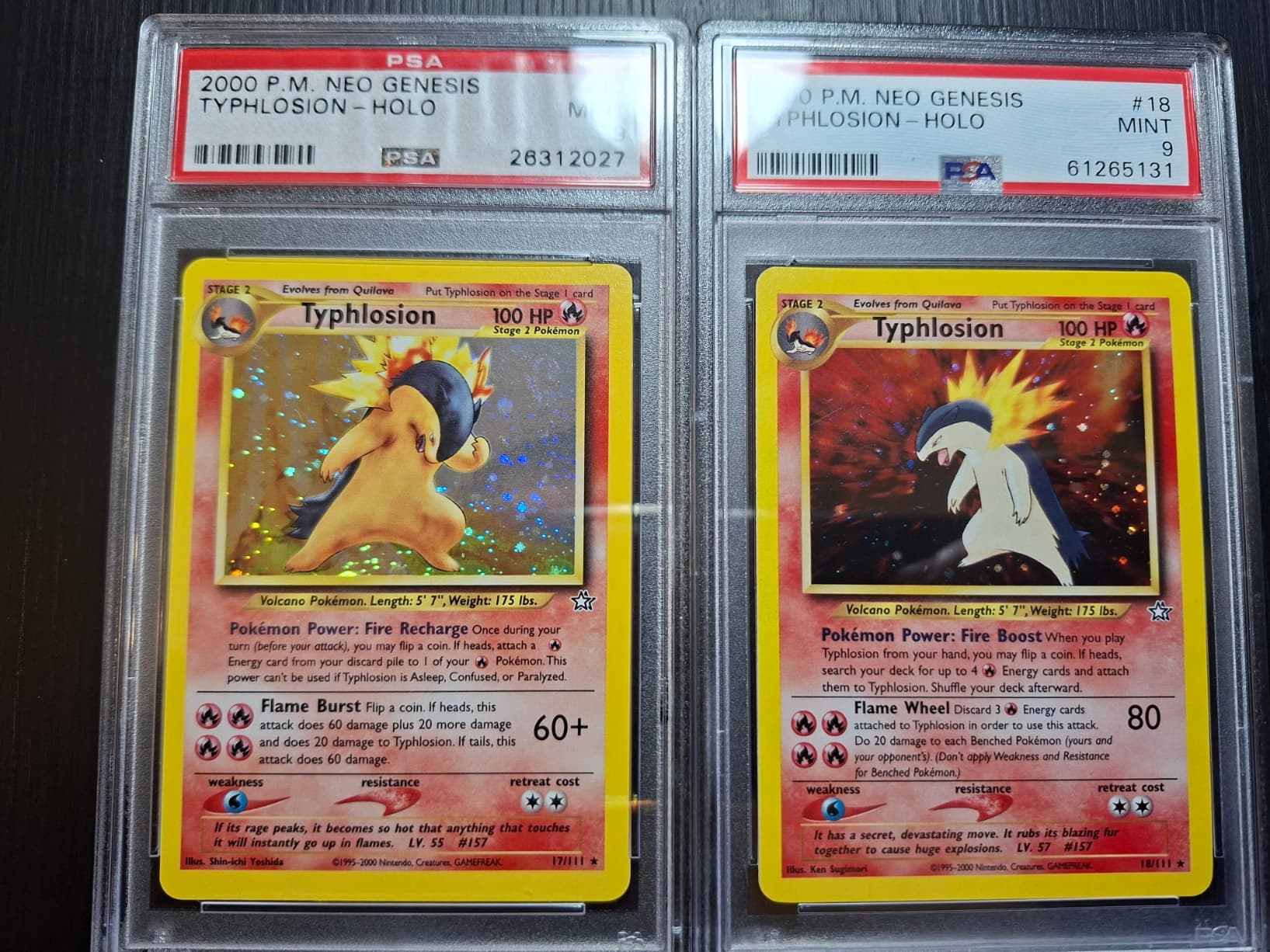
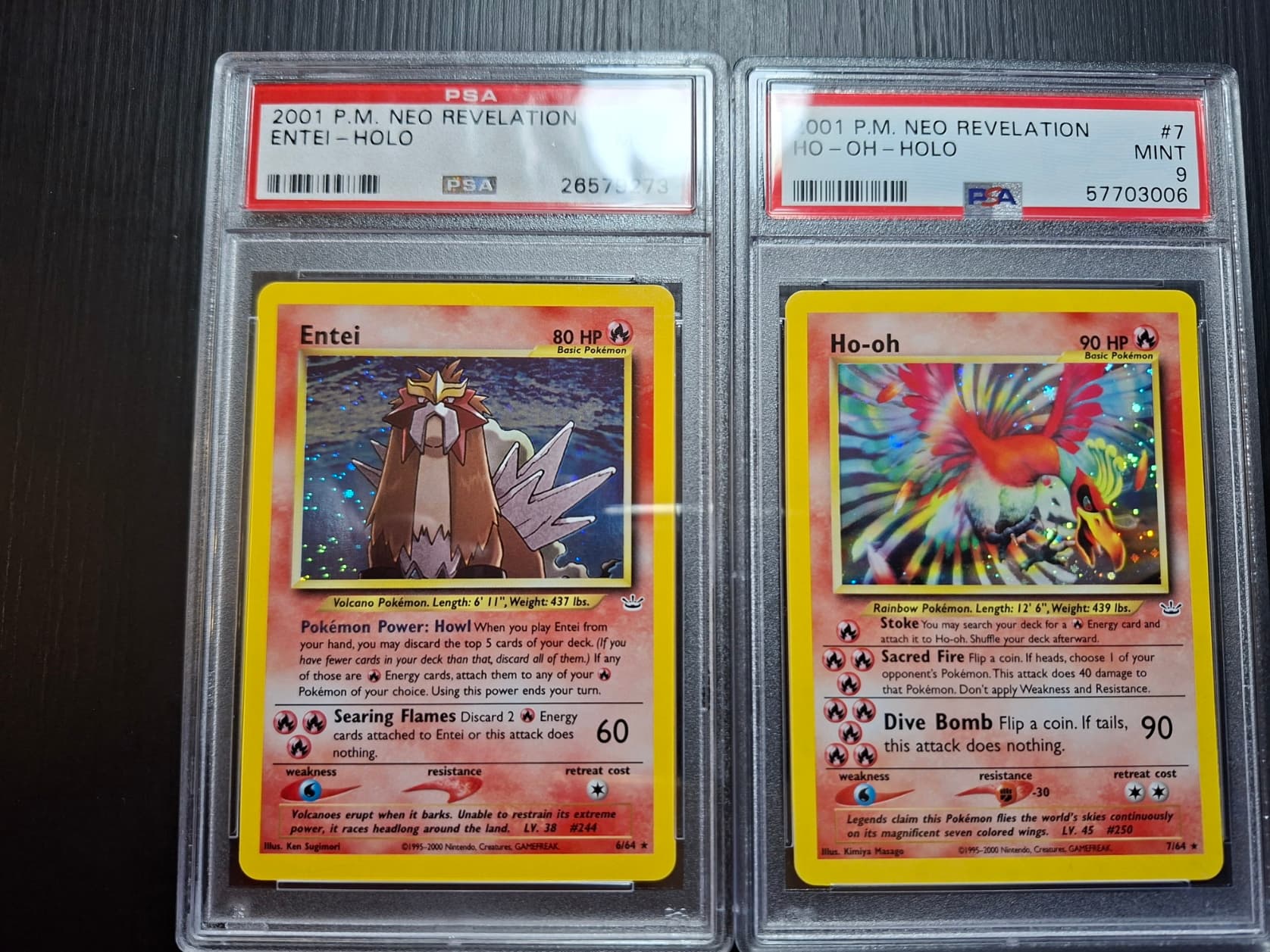
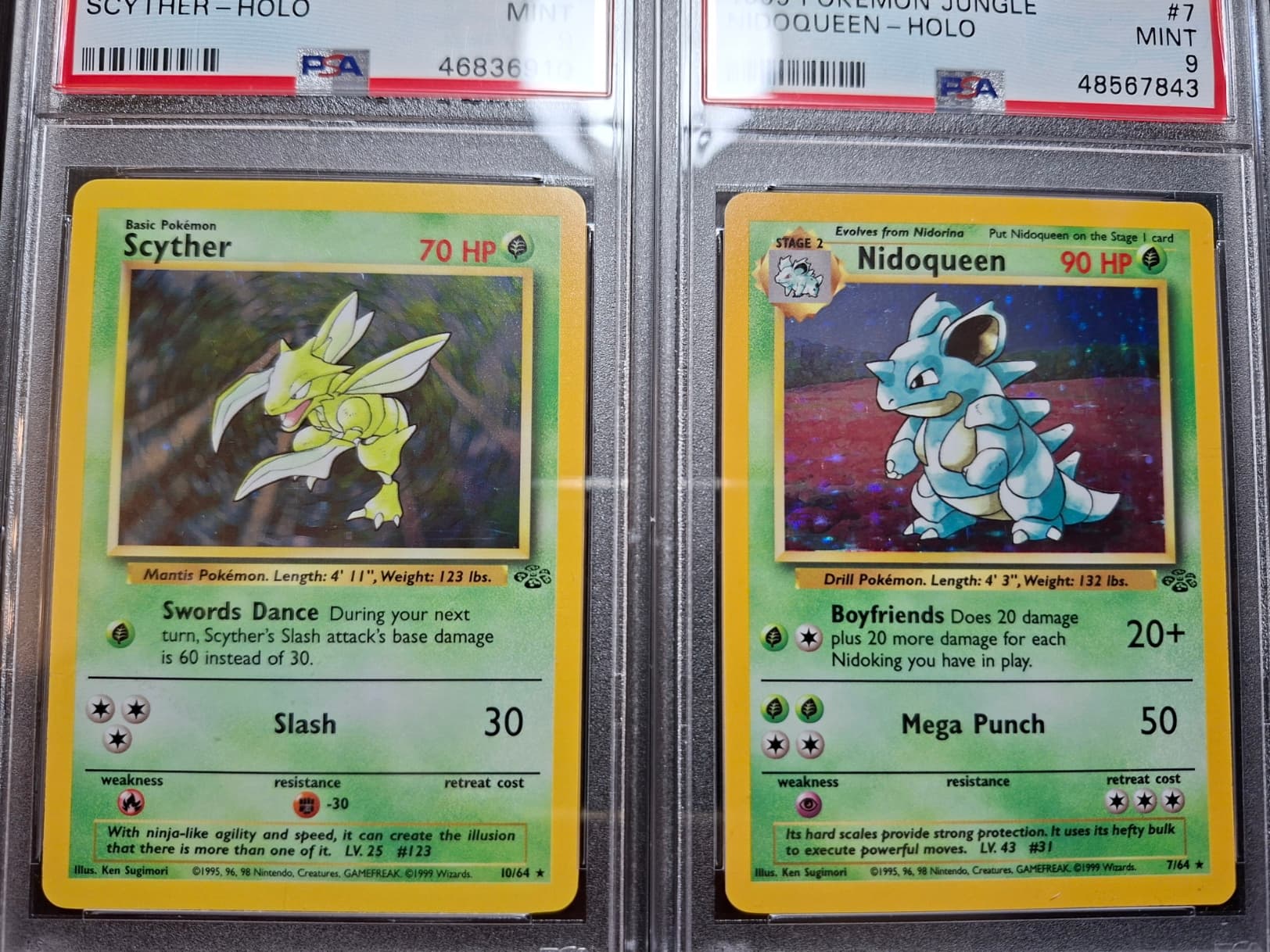
I’ve noticed some pretty big color differences between cards from the same WOTC sets — some look lighter or more washed out, while others appear much more saturated. Examples attached below.
Is this normal variation between print runs, or could the lighter ones be due to sun damage?
Also curious if collectors consider the lighter variants less desirable.
Would be great if you could share your own examples for comparison.
USA, Australia, and Belgium prints look different. Grading companies have not been interested in properly identifying unique WOTC variants. You should try a black light on them and check for lack or presence of a shadow within the “e” on the back of the cards.
@Nightvulture and others have been working on this for a bit.
I personally have pulled these distinct variants from packs.
If there were cards with significantly lighter saturation than normal, they would be worth more too. Unfortunately fading makes it more difficult to identify which cards are truly lighter copies versus having UV damage.
Just for completeness, there are cards with lighter black ink that are worth more, but that’s different than the overall background color. Here’s an example:
Some of these variants are more or less desireable and honestly it could be the printing(pbm vs yaquinto vs. CM). I have what i believe to be a “4th print” USA Hitmonchan and its slightly more saturated than my others. The cardstock matches my “usa 1” designation. At this time, i believe most printers were printing their own foils and thats why we have variation. I just cant afford to properly accomplish with foils what ive done with the rest of the cards
Belgium foils are still a mystery, Aus foils are .
To echo what Dyl and Josh have said, in my experience copies with high saturation tend to bring more of a premium than those with low saturation. Part of that is skepticism/fear of sun damage, and personally I think the ink-heavy examples tend to be cooler.
Here are some high saturation examples I have where the yellow ink is heavier than normal, essentially taking the usual pattern and dialing it up:
It’s definitely subjective with regards to what’s worth collecting, or what’s enjoyable to you as an individual. For example I’ve seen some shadowless holos with what seems to be insufficient magenta ink - albeit not necessarily enough to be considered an ‘error’ - that I still think are cool enough to go for.
I’d say if the card in question has one identifiable ink layer that’s noticeably lighter than normal, it’s cooler/more desirable than a card that seems lighter colored overall without any one layer standing out as being different.


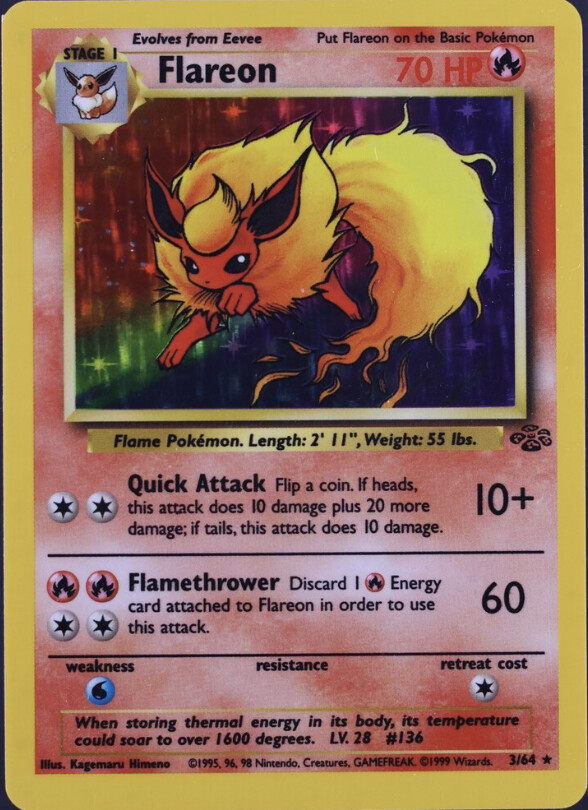


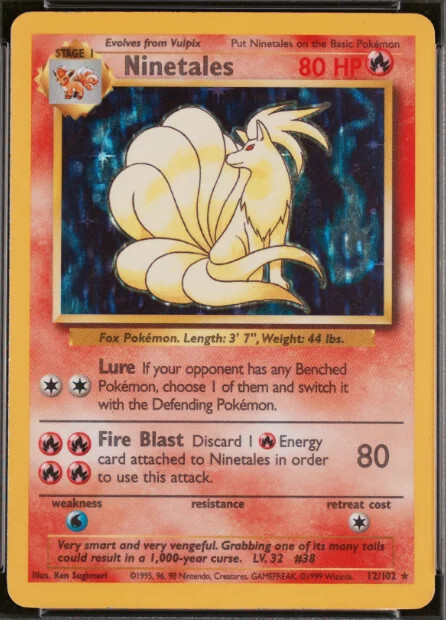
 .
.